
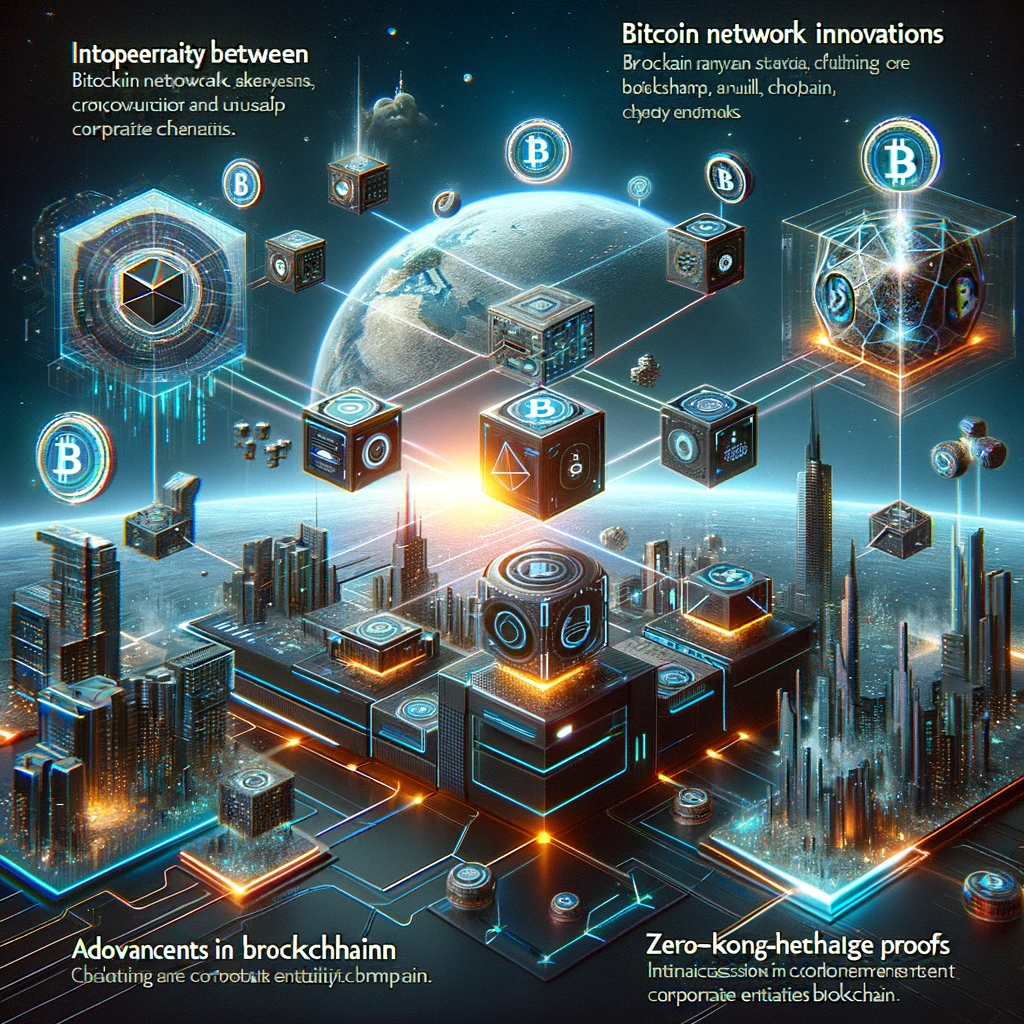
Embracing Interoperability
In 2024, blockchain technology is expected to break new ground in interoperability. Experts predict that blockchain platforms will increasingly be able to interact seamlessly, sharing data and transferring value. This will lead to a more unified and efficient blockchain ecosystem, with interoperability playing a critical role in fostering innovation and new applications, particularly in decentralized finance (DeFi).
Bitcoin’s Evolution
With decreasing fixed block rewards, the focus will shift to raising variable block rewards from transaction fees. Experts anticipate significant usage catalysts emerging from technological innovation within the existing Bitcoin network, such as increased usage of data blobs like Ordinals and Atomicals, and heightened activity on secondary layer 2s like the Lightning Network.
Modularity and Hybrid Solutions
The blockchain space will see developments in modularity, with more hybrid solutions like Ethereum roll-ups coming to market. This will contrast with blockchains like Solana, which continue to focus on a monolithic approach. Watching how these differing narratives unfold will be intriguing, especially as Ethereum roll-ups explore using the Solana virtual machine.
Advancements in Zero-Knowledge Proofs
Significant advancements in zero-knowledge proofs (SNARKs) are also anticipated. These technological leaps will enable a wide array of applications, from edge devices in the Internet of Things verifying upgrades to media editing software embedding content authenticity data. This advancement will benefit consumers, offering more secure and verifiable digital interactions.
Key Management and User Interfaces
The blockchain industry is expected to overcome the technical challenges of self-custody. The emergence of account abstraction suggests that 2024 could be the year when seed phrases become obsolete for most users, marking a significant milestone towards more inclusive finance.
Censorship and Centralization Concerns
Experts predict significant development breakthroughs in addressing censorship concerns related to blockchain centralization. Innovations like mempool encryption are expected to shield transactions from potential censorship before inclusion in a block.
Enhancing Security and Privacy
In light of numerous hacks and frauds within the crypto space, the blockchain industry will focus more on creating security solutions and taking privacy seriously. This will involve developing more robust protocols to protect users and their assets.
Corporate Crypto
With larger companies moving beyond crypto as an asset class to using it as a product and tool for user engagement, networks and developer platforms will need to prepare for onboarding these entities. The expansion of the crypto footprint will bring in the next wave of on-chain activity.
Layer-2 Dynamics
The influx of activity on layer-2 chains is expected to increase, especially as Ethereum’s gas fees rise. As a result, DeFi protocols on layer-2 chains may see a significant inflow of liquidity.
Potential Layer-2 Consolidation
Following Ethereum’s implementation of EIP-4844, transaction fees and scalability for layer-2 chains are expected to improve. This could lead to a consolidation of Ethereum L2s down to a few dominant players.


